Mudra
Mudra directs the flow of energy, assisting in health, concentration and meditation. TriYoga includes over 1,300 mudras.
Hasta Mudra
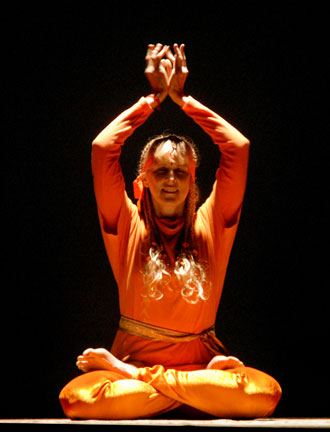
From ancient times, there have been references to mudra both in literary and visionary form. Nearly lost, the art and science of mudra has only recently re-emerged. From simple to complex, flowing one into the next or sustained, hasta mudras facilitate healing and meditation. These mystical hand gestures directly influence the flow of prana for health, mental focus, and deeper spiritual awareness. Before language developed, hand gestures were a main form of communication. Later, as spoken language arose, the hands assisted in this process. Just as outer gestures assist in communication with others, hasta mudras are for inner communication. Categories of mudra include those with one hand only; both hands engaged in a symmetrical mudra; or each hand in a different mudra. Enjoy the sacred geometry of the hands expressed through hasta mudra.
Eye Mudra
Eye mudras support mental focus for concentration and meditation. The eyes are closed and gently lifted inward and upward towards the seat of the mind, focusing on the space between the eyebrows. Become the observer of your senses and thoughts. With the stillness of the eyes, pratyahara is enhanced, withdrawing the mind from the world of senses. This allows one to make the U-turn inside.
Body Mudra
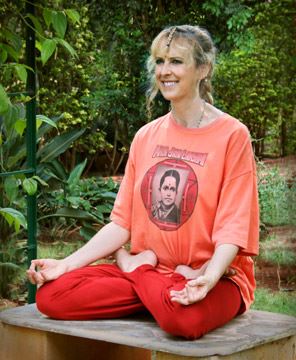
The body becomes a mudra by maintaining relaxation-in-action. The TriYoga Flows move the whole body into a graceful mudra. The body feels focused and energized. The ultimate body mudra is the seated posture for meditation. A yogi's body takes the geometric form of a triangle. Therefore, the lotus posture and similar seated postures are the preferred āsanas for meditation.